


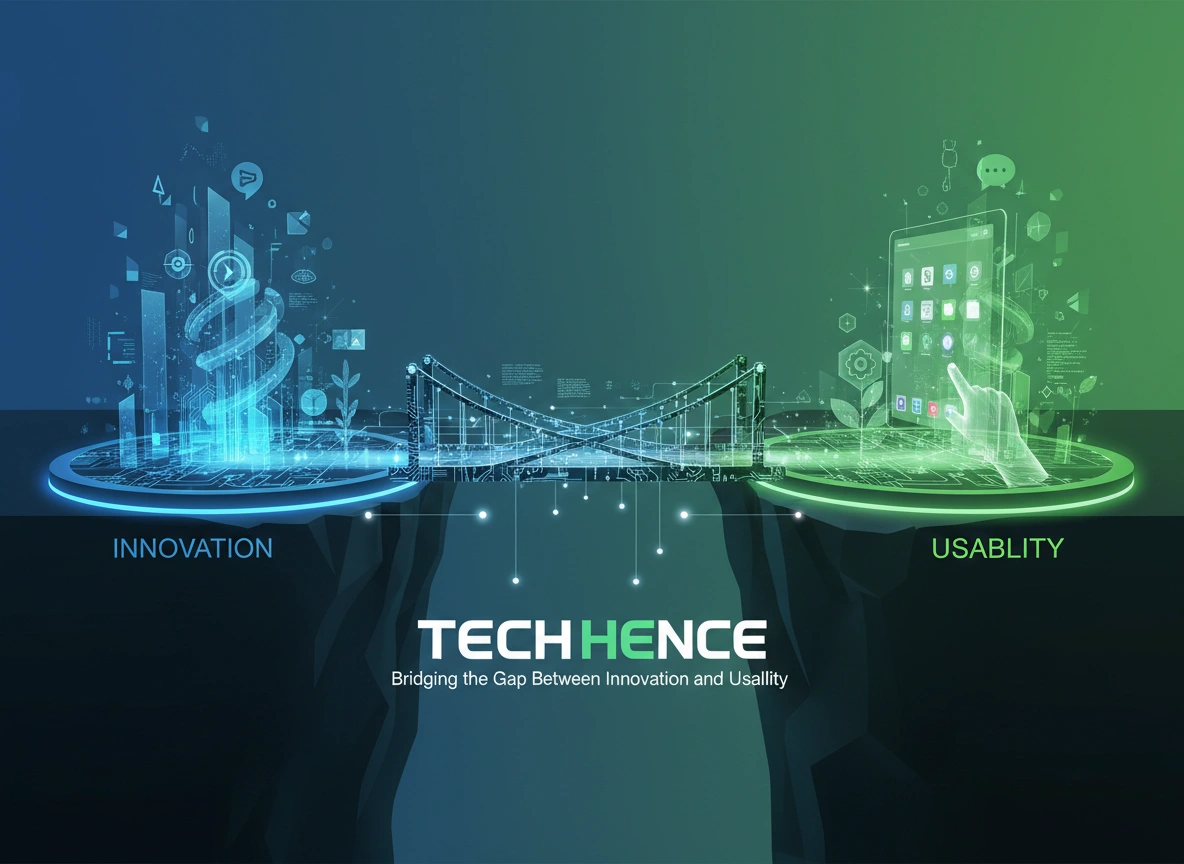
Innovation often paints a picture of groundbreaking features, complex algorithms, and futuristic capabilities. But what happens when these powerful advancements are too complicated for the average person to use? A gap emerges between what technology can do and what users can actually achieve with it. This disconnect is where the most brilliant ideas can falter, failing to gain traction not because they lack power, but because they lack simplicity. The true mark of successful technology lies in bridging this gap, transforming complex innovation into intuitive, accessible experiences.
This article explores the crucial balance between pushing technological boundaries and ensuring widespread usability. We will examine the challenges innovators face, look at examples of products that succeeded or failed in this pursuit, and outline actionable strategies for creating technology that is both powerful and practical. By focusing on the user from the very beginning, companies can ensure their innovations don’t just exist but thrive in the hands of the people they are meant to serve.
The Innovation-Usability Dilemma
At the heart of product development lies a fundamental tension. On one side, engineers and visionaries are driven to create something entirely new, to push the limits of what’s possible. On the other, designers and user advocates champion simplicity, clarity, and ease of use. This push and pull can create a dilemma: how do you introduce revolutionary features without overwhelming the user?
Why This Gap Exists
Several factors contribute to the divide between innovative potential and practical usability. One common reason is the “curse of knowledge.” The experts who develop a product are so deeply familiar with its intricacies that they can no longer see it from a novice’s perspective. What seems obvious to them can be completely baffling to a new user.
Another factor is the pressure to pack in more features. In a competitive market, companies often fall into a “feature-first” mindset, believing that a longer list of capabilities will attract more customers. This can lead to bloated, confusing interfaces where essential functions are buried under layers of non-essential options. The original purpose of the product gets lost in a sea of complexity.
Finally, development cycles that prioritize engineering over user experience design can widen this gap. When usability testing is treated as a final-step checkbox rather than an integral part of the process, fundamental design flaws are often discovered too late. The result is a product that functions on a technical level but fails on a human one.
The Cost of Getting It Wrong
The consequences of failing to bridge this gap are significant. Products with poor usability suffer from low adoption rates, high customer churn, and negative reviews. A user who feels frustrated or incompetent while using a new piece of tech is unlikely to give it a second chance. Think of early smart home devices that required complex network configurations and command-line inputs. While technically innovative, their difficulty created a high barrier to entry, limiting their market to only the most tech-savvy enthusiasts.
Conversely, Google Glass stands as a prime example of an innovation that stumbled on usability and social acceptance. Technologically, it was a marvel. But its unintuitive controls, limited practical applications for the average person, and the social awkwardness it created led to its eventual failure as a consumer product. The technology was there, but its human-centric design was not.
Pillars of User-Centric Innovation
Achieving a balance between innovation and usability is not about sacrificing one for the other. It’s about integrating them. Successful companies build their entire development process on a foundation of user-centric principles.
Empathy in Design
The journey begins with empathy. Before a single line of code is written, it’s essential to understand the end-user’s world. What are their goals? What are their pain points? What is their level of technical expertise? Techniques like creating user personas, mapping customer journeys, and conducting ethnographic research help teams step into their users’ shoes.
This empathetic approach ensures that innovation is directed toward solving real-world problems. Instead of asking, “What cool new feature can we build?” the question becomes, “What is the most intuitive way we can help our users achieve their goals?” This shift in perspective is subtle but transformative.
Iterative Prototyping and Testing
Ideas should be tested early and often. Rather than spending months building a fully-featured product in isolation, effective teams create low-fidelity prototypes and get them in front of real users as quickly as possible. This iterative cycle of building, testing, and learning allows for rapid course correction.
Usability testing can reveal surprising insights. Users might misunderstand an icon, struggle to find a key feature, or use the product in a way the developers never intended. Each piece of feedback is an opportunity to refine the design, simplify workflows, and close the gap between the intended experience and the actual one. This process prevents teams from investing heavily in ideas that are fundamentally flawed from a user’s point of view.
The Principle of Progressive Disclosure
One of the most powerful strategies for managing complexity is progressive disclosure. This design principle involves showing users only the information and options they need for the task at hand. More advanced or less frequently used features are kept out of sight until the user specifically requests them.
Apple’s iOS is a masterclass in progressive disclosure. The home screen presents a simple grid of apps. Within each app, the primary functions are immediately accessible. Advanced settings and customizations are tucked away in a dedicated “Settings” menu. This layered approach allows new users to get started quickly without feeling overwhelmed, while still providing the depth and control that power users desire. It delivers innovation in manageable doses.
Case Studies: Successes in Bridging the Gap
Some of the most successful tech products owe their dominance to a masterful blend of innovation and usability.
The Apple iPhone: Redefining the Smartphone
Before the iPhone, smartphones were powerful but clumsy. They often featured physical keyboards, confusing operating systems, and styluses for navigation. Apple’s innovation was not just the technology itself, but the holistic user experience. The multi-touch interface was revolutionary, yet so intuitive that a child could use it.
Apple stripped away the unnecessary, focusing on a core set of well-designed applications. The App Store was another brilliant move, creating an ecosystem where innovation could flourish while adhering to Apple’s design guidelines. The iPhone demonstrated that a profoundly advanced piece of technology could also be incredibly simple and enjoyable to use.
Slack: Simplifying Team Communication
Email had long been the standard for professional communication, but it was inefficient for real-time collaboration. Numerous chat platforms existed, but none broke through in the corporate world on a massive scale until Slack.
Slack’s innovation was its channel-based organization, powerful search capabilities, and extensive integrations. However, its success was cemented by its obsessive focus on user experience. From the friendly onboarding process to the satisfying notification sounds, every detail was designed to make communication feel less like a chore. Slack took the complex problem of team-wide communication and created a solution that was not only powerful but also fun to use, bridging the gap for millions of users.
Conclusion: Building for Humans First
Innovation is the engine of progress, but usability is the steering wheel that directs it toward a meaningful destination. Technology created in a vacuum, without constant consideration for the end-user, is destined to become a curiosity rather than a cornerstone of our daily lives. The gap between a powerful idea and a useful product is bridged by empathy, rigorous testing, and a commitment to simplicity.
For innovators, developers, and business leaders, the path forward is clear. Prioritize understanding your users as deeply as you understand your technology. Integrate user feedback into every stage of the development lifecycle, not just at the end. Strive to manage complexity through thoughtful design, such as progressive disclosure. By placing the human experience at the center of the creative process, we can ensure that the next wave of technological advancements empowers everyone, not just a select few. The future belongs to the innovations we can all use.
Please visit website for more info.

