


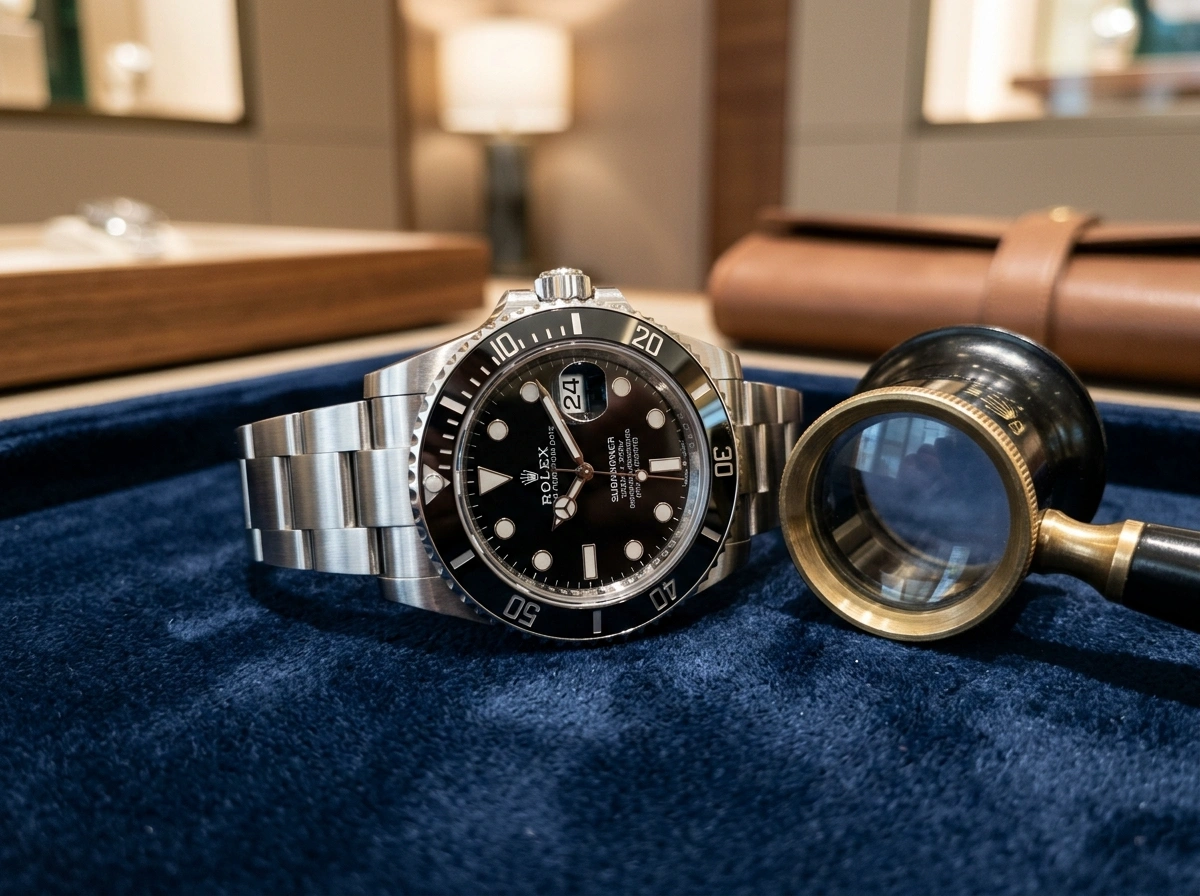
Buying a luxury watch is a significant investment, and the market is full of convincing fakes. Counterfeiters have grown skilled, producing replicas that fool casual buyers and sometimes even experienced collectors. The good news is that genuine timepieces leave behind a trail of clues. If you know what to look for, you can spot the difference between an authentic watch and an imitation with far more confidence.
This guide walks you through the practical methods serious buyers use to verify authenticity. Whether you are shopping for your first Rolex or adding to a growing collection, these checks will help protect your money and your peace of mind.
Start With Serial and Reference Numbers
Every authentic luxury watch carries identifying numbers that connect it to the manufacturer’s records. The reference number tells you the model, while the serial number ties the piece to a specific production run or year. On a real watch, these markings are crisp, evenly spaced, and engraved with precision. Fakes often show shallow, blurry, or unevenly stamped numbers.
Where these numbers appear varies by brand. They may sit between the lugs, on the case back, or along the inner bezel. Once you locate them, you can cross-reference the numbers against the brand’s known production data. If a serial number doesn’t match the model or appears on multiple watches, treat that as a serious warning sign.
Examine the Paperwork and Provenance
A complete set of original documents adds enormous credibility to any luxury watch. Look for the warranty card, the original receipt, instruction booklets, and the branded box. Authentic paperwork uses high-quality printing, accurate fonts, and consistent details that match the watch itself.
Provenance, or the documented history of ownership, also matters. A watch that comes with service records, past sales receipts, and a clear chain of custody is far easier to trust. Be cautious when paperwork is missing or when the seller offers vague explanations. While genuine watches do sometimes lose their papers over the years, the absence of documentation should prompt closer inspection of everything else.
Vet the Seller’s Reputation
Where you buy matters just as much as what you buy. Established dealers, authorized retailers, and reputable auction houses stake their names on every transaction. They have systems in place to confirm authenticity and reputations that they cannot afford to ruin.
When dealing with private sellers or online listings, research thoroughly. Read reviews, check how long the seller has operated, and look for transparent return policies. Ask detailed questions and pay attention to how confidently they answer. A trustworthy seller welcomes scrutiny and provides clear photos, including close-ups of the movement and engravings. The wider replica market, where you can find a so-called super clone rolex for sale, shows just how sophisticated imitations have become, which makes seller trust essential before any money changes hands.
Inspect the Movement
The movement is the engine of a watch, and it is one of the hardest things for counterfeiters to copy correctly. Genuine luxury movements are finished to extraordinary standards, with smooth sweeping seconds hands, decorative engravings, and clean, precise components.
If possible, have a watchmaker open the case back to examine the movement directly. Authentic movements carry brand markings, jewel counts, and finishing techniques like Côtes de Genève or perlage. Many fakes use cheap mechanisms that simply imitate the look from the outside. A quartz movement inside a watch that should house an automatic caliber is an immediate red flag. The second hand on a quality automatic glides rather than ticking once per second.
Study the Materials and Finishing
Luxury brands use premium materials and obsess over finishing. Real gold, surgical-grade stainless steel, sapphire crystal, and high-quality ceramics all feel and behave differently from the cheaper substitutes found in fakes. Run your fingers along the edges of the case and bracelet. Authentic pieces feel solid, smooth, and free of sharp burrs or rough spots.
Pay attention to the polishing and brushing. Genuine watches show consistent transitions between brushed and polished surfaces, with crisp lines and no overlap. Counterfeit cases often look slightly off, with muddy finishes or imperfect angles. The crystal should be scratch-resistant sapphire, and a quick check is whether water beads neatly on the surface.
Check Weight and Dimensions
Premium materials have weight. A genuine luxury watch usually feels substantial in the hand because of its solid construction and quality metals. Many fakes use lighter alloys, so they feel hollow or flimsy by comparison.
Dimensions matter too. Manufacturers publish exact measurements for case diameter, thickness, and lug width. With a caliper and the official specifications, you can confirm whether the watch matches the real thing. Even small deviations of a millimeter or two can reveal a counterfeit, since authentic production tolerances are extremely tight.
Look Closely at the Dial, Lume, and Details
The dial reveals a great deal. Genuine watches feature flawless printing, perfectly aligned text, and crisp logos. Examine the dial under magnification and look for smudged printing, uneven spacing, or misspelled words, all common in fakes.
Lume, the glowing material on hands and markers, offers another clue. Authentic luxury watches use high-grade luminous compounds that charge quickly and glow brightly and evenly. Cheap replicas often have weak, patchy, or short-lived lume. Check that the date window aligns correctly and that any magnification, such as a Rolex Cyclops lens, provides the proper level of enlargement. Small misalignments betray a counterfeit.
Review the Service History
A watch’s service history tells you how it has been cared for and confirms that genuine parts were used during maintenance. Authorized service centers keep records, and these documents help verify both authenticity and condition.
Watches serviced by the official brand or certified watchmakers retain their value and integrity. If a watch has been repaired with aftermarket parts, it may still function but could lose authenticity in the eyes of collectors. Ask for service receipts and confirm that any replaced components were genuine.
Use Third-Party Authentication
When the stakes are high, professional authentication offers the strongest assurance. Independent experts and specialized services examine watches in detail, using their experience and equipment to confirm legitimacy. Many auction houses and watch dealers offer this service, and some grading companies issue certificates.
A professional can spot subtle inconsistencies that even careful buyers miss. For an expensive purchase, the cost of authentication is small compared to the risk of buying a fake. This step is especially wise for vintage and rare models, where forgeries can be particularly convincing.
Final Thoughts
Verifying the authenticity of a luxury timepiece comes down to patience and attention to detail. No single check is foolproof on its own, but together these methods build a clear picture. Examine the serial and reference numbers, demand proper paperwork, trust reputable sellers, and inspect the movement, materials, and finishing. Weigh the watch, measure it, study the dial and lume, and review its service history.
When in doubt, bring in a professional. The more layers of verification you apply, the harder it becomes for a fake to slip through. With these tools in hand, you can shop with confidence and invest in a timepiece that delivers genuine value for years to come.

