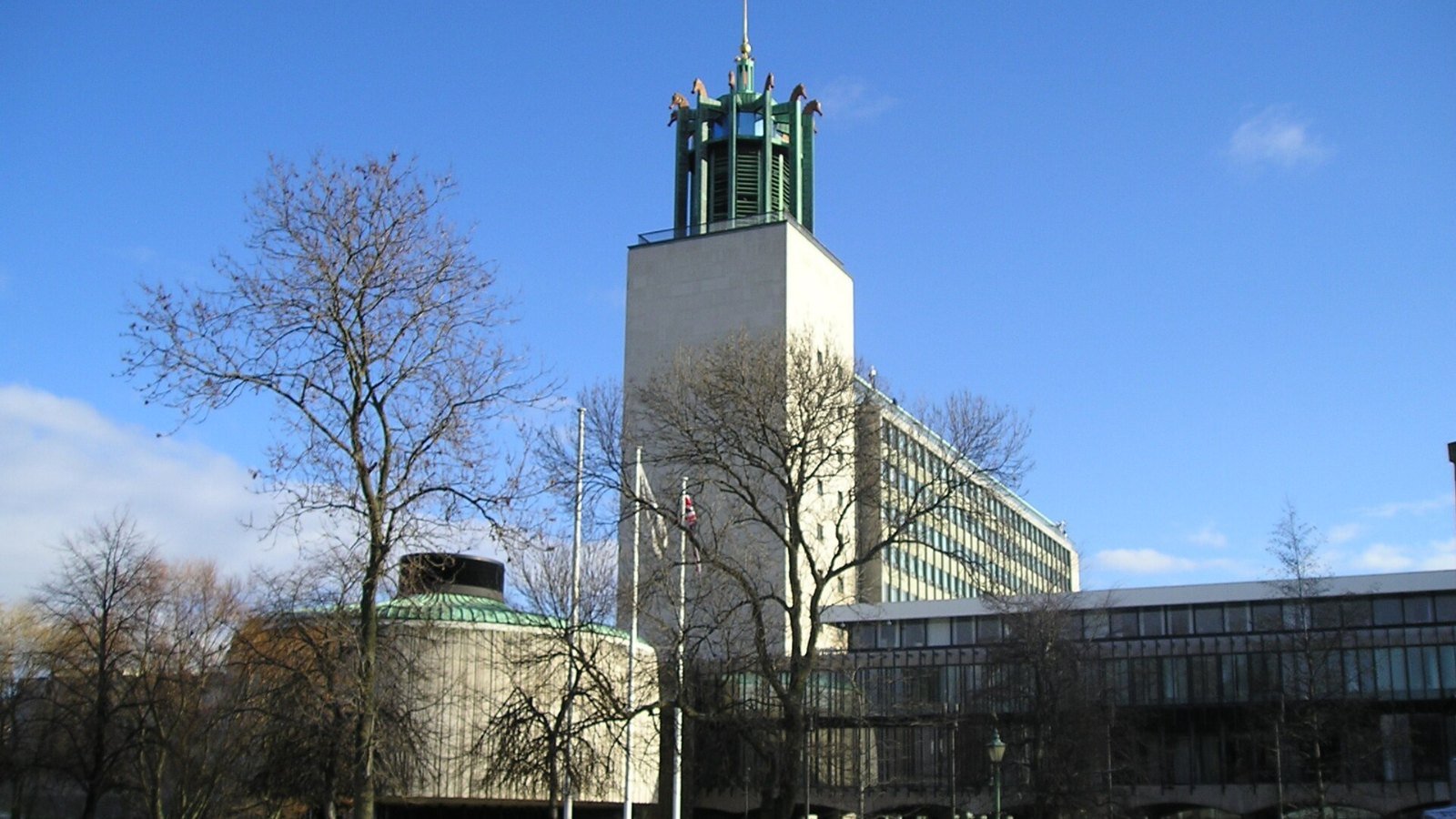
English local government will spend more in 2026-27 than at any point since austerity began. Many councils will still be closing libraries, thinning bus subsidies and stretching repair budgets. The distance between the headline funding number and what a council can actually deliver has become the central story of English local government.
More money, and a bigger hole
The final local government finance settlement for 2026-27 was published in February and approved by the Commons on 11 February. It set core spending power for England at £83.5bn, a substantial rise on the £69bn-plus settled for 2025-26, which itself represented a 6.8 per cent cash increase. On paper, this is the most generous run of settlements in more than a decade.
The picture underneath is less comfortable. Alongside the settlement, the government confirmed Exceptional Financial Support for 35 authorities worth just over £1.5bn for 2026-27 – broadly the same scale of emergency backstop as the previous year, when around 30 councils received in-principle support. Exceptional Financial Support is not a grant. It is usually permission to fund day-to-day spending by selling assets or borrowing, which fixes this year’s accounts by weakening next year’s balance sheet. A council that needs it twice is not recovering.
The National Audit Office has repeatedly warned that the sector’s underlying financial sustainability is not resolved by annual top-ups. Its work on local government financial sustainability sets out how short funding horizons make it rational for councils to defer maintenance and asset renewal – the cheapest thing to cut in-year and the most expensive to catch up on later.
Where the money actually goes
The composition of council spending explains most of the paradox. Analysis by the Institute for Government found that social care rose from 53.0 per cent of council service budgets in 2009/10 to 68.5 per cent by 2024/25. Statutory duties to protect vulnerable adults and children are not discretionary, and demand has grown faster than funding.
Everything else absorbs the squeeze. Library spending fell 49.7 per cent in real terms across the same period. That is the mechanism behind the apparent contradiction: a council can receive a real-terms funding increase and still shut a branch library, because the increase is consumed before it reaches the discretionary two-thirds of services residents most visibly use.
The SEND problem nobody has solved
The fastest-growing pressure is special educational needs and disabilities. The Public Accounts Committee reported in March 2026 that home-to-school transport cost councils £2.6bn in 2024-25, of which £2bn related to children with SEND. Committee evidence projected that local authority SEND deficits would exceed £5bn by March 2026.
These deficits currently sit outside council general funds under a statutory override – an accounting arrangement that keeps them off the books that determine solvency. That override has been extended rather than resolved. Whenever it lapses without a settlement of the underlying debt, a significant number of authorities move from stretched to technically insolvent overnight. This is the single largest known risk in English local government finance, and it is a timing risk as much as a funding one.
Council tax is doing the heavy lifting
The other reason spending power rises while budgets feel tighter is that a growing share of the increase comes from local taxpayers rather than central grant. Referendum principles for 2026-27 allowed a 3 per cent core increase plus a 2 per cent adult social care precept without a local vote. The average Band D bill in England rose to £2,392, up from £2,235.80 the previous year.
That design has a distributional consequence. Councils with high property values and low deprivation raise more from each percentage point than councils with the opposite profile, which tend to have higher social care caseloads. A funding model that leans on council tax therefore transfers the least capacity to the places under the most pressure.
What the sector says comes next
The Local Government Association estimated in July 2026 that councils face a £7.0bn funding gap by 2028-29, driven by an additional £5.8bn in adult social care costs and £4.4bn in children’s social care. Those two lines alone exceed the total the LGA identifies as the gap, which tells you the rest of the sector is being used as the balancing item.
Ministers have pointed to multi-year settlements and a review of the funding formula as the structural answer. Longer horizons genuinely help – they make preventative spending and asset maintenance defensible in a way annual settlements do not. But redistribution through a new formula creates losers among authorities that are themselves not comfortable, which is why formula reform has been announced more often than completed.
What to watch
Three indicators will tell residents more than any settlement headline. First, the number of authorities requesting Exceptional Financial Support: if it stays near 35, the problem is structural rather than local mismanagement. Second, the treatment of accumulated SEND deficits, which determines whether a solvency cliff arrives. Third, the trajectory of discretionary services – libraries, parks, road maintenance, youth provision – which is the honest measure of what a funding settlement delivered.
Judged against those three, the 2026-27 settlement bought time. It did not close the gap.
Sources and further reading
- approved by the Commons on 11 February (commonslibrary.parliament.uk)
- Exceptional Financial Support (gov.uk)
- National Audit Office (nao.org.uk)
- Local Government Association (local.gov.uk)