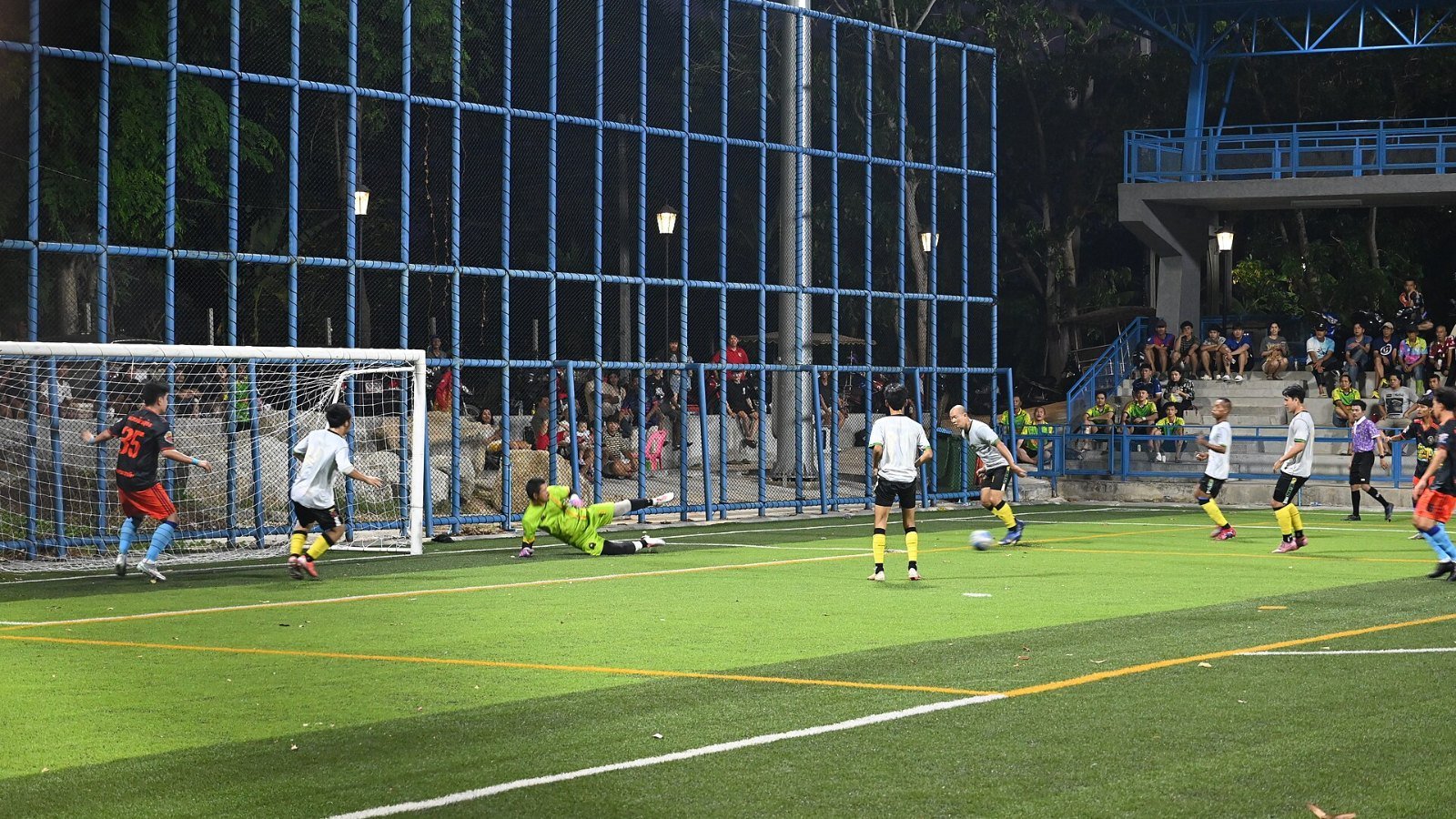
The constraint on grassroots football in England is no longer interest. It is grass. Around two in every three grassroots pitches are rated poor quality, roughly 100,000 matches a season are called off because surfaces are unplayable, and the cumulative effect runs to more than three million lost playing opportunities each year. For a sport that has spent a decade successfully recruiting new players, this is an awkward place to arrive.
The mismatch is easiest to see in the artificial grass pitch numbers. England has roughly 970 registered players for every all-weather pitch. In Germany the equivalent figure is 421. Put another way, an English player is competing for access to a reliable winter surface with more than twice as many other players as their German counterpart. Only about 4 per cent of local authorities have what is assessed as a sufficient supply of pitches, and current estimates suggest England needs in the region of 2,000 additional third-generation surfaces to close the gap.
Why cancellations compound
A called-off match is not a neutral event that simply gets rescheduled. Fixture calendars in youth and amateur leagues have almost no slack between October and March, so a cancellation frequently becomes a permanent loss. Coaches lose training continuity, volunteers lose momentum, and the players most likely to drop out are the marginal ones — newcomers who have not yet formed the habit. The three-million figure for lost opportunities is the aggregate of thousands of small disengagements.
Winter is when this bites hardest and when the demand curve is steepest. Natural turf pitches in heavy use through a wet autumn cannot recover without either drainage investment or rest periods that fixture congestion does not allow. The result is a slow degradation cycle: heavier use produces worse surfaces, worse surfaces produce more cancellations, and more cancellations concentrate remaining play onto the pitches that are still standing.
The participation targets make it urgent
The Football Association’s facilities strategy is built around growth, including a commitment to increase female participation by 50 per cent by 2028. That target is achievable in recruitment terms; the women’s game has demonstrated repeatedly that it can attract players when given visibility. It is much harder in capacity terms. Adding players to a system already turning away matches means either new surfaces or a worse experience for everyone currently in it.
Government investment has been substantial in absolute terms. The Department for Culture, Media and Sport committed more than £420 million across the 2021 to 2026 period through its multi-sport grassroots facilities programme. The difficulty is that construction and refurbishment costs have risen roughly 29 per cent over the same window, so the real purchasing power of that commitment is markedly lower than the headline suggests. A pot fixed in cash terms against rising build costs delivers fewer pitches each year it runs.
The public health argument
There is a broader case here that goes beyond sport. Data published through Sport England’s Active Lives survey shows around 3.5 million adults meeting activity guidelines through football specifically, with 64.6 per cent of adults overall reaching Chief Medical Officer thresholds. Team sport is one of the few activity categories that retains participants through their thirties and forties, largely because the social commitment is external rather than self-generated. Losing a fixture is not just losing a game; it is weakening the mechanism that keeps people active.
What would actually change the numbers
Three interventions carry more weight than the rest. Drainage improvement on existing natural turf is unglamorous and considerably cheaper per pitch than new construction, and it directly reduces winter cancellations. Floodlighting extends usable hours on surfaces that already exist, effectively increasing capacity without new land. And multi-year rather than annual funding settlements allow local authorities and clubs to plan projects that take more than one financial year to deliver — which is most of them.
None of these are technically difficult. The obstacle is that pitch maintenance sits in local authority budgets that have been under sustained pressure, competing against statutory services. A pitch that becomes unplayable rarely produces a headline, and the cost of its deterioration is paid by volunteers and players rather than appearing on a balance sheet.
The uncomfortable conclusion is that English grassroots football has solved the hard problem and stalled on the easy one. Generating demand for the game required cultural change over two decades. Providing somewhere to play it requires drainage, lighting and sustained capital funding. The sport is currently better at the first than the second.
Why this matters to UK readers
Form, availability and competition context can change quickly. Readers should check the relevant league, club or governing body for the latest fixture, disciplinary and squad information, while using the evidence and dates in this report to understand the wider picture.
PR Press will continue to review developments related to England’s Grassroots Pitch Shortage Is Now the Sport’s Biggest Bottleneck and update the coverage when reliable new information becomes available.
Sources and further reading
- Football Association’s facilities strategy (thefa.com)
- multi-sport grassroots facilities programme (gov.uk)
- Sport England’s Active Lives survey (sportengland.org)