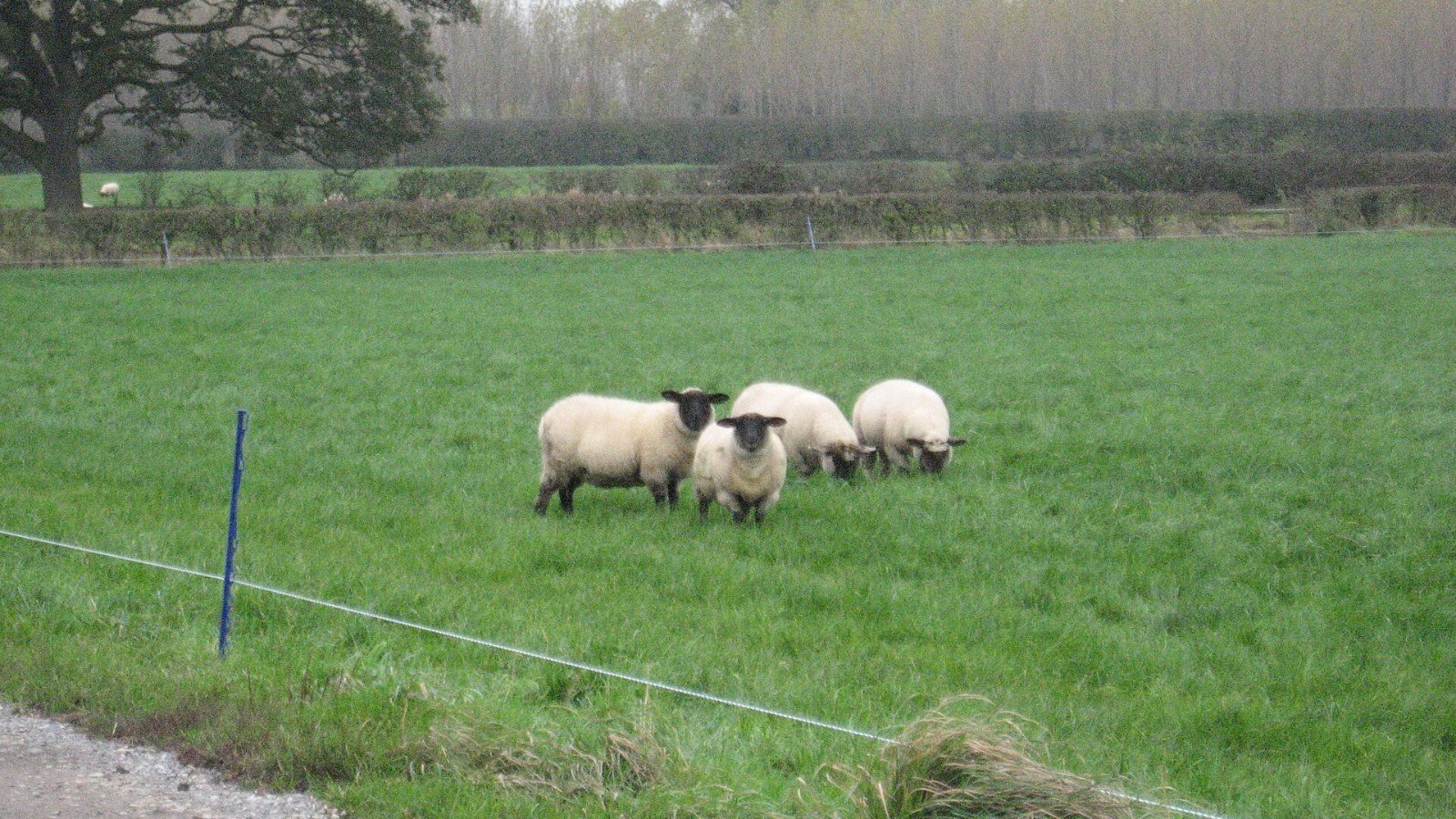
There is a particular indignity familiar to British sheep farmers over the past decade: paying more to shear a flock than the resulting wool was worth. Shearing costs around £1.93 per ewe, and for several years the wool from that animal fetched materially less. Wool became a welfare obligation rather than a product — sheep must be shorn regardless of whether anyone wants the fleece.
That has changed, at least directionally. The 2025 clip returned around 68p per kilogram to farmers, up roughly 70 per cent from about 40p. British Wool has indicated it expects to exceed £1 per kilogram for the 2026 clip. At £1 per kilogram, wool stops being a cost centre and becomes, modestly, income.
The scale of the British clip
The 2024 clip totalled 19,290,044 kilograms, with producers receiving 41.1p per kilogram and total realisation of £19.2 million against an auction average of 99.5p per kilogram. The gap between the auction price and the producer price covers collection, grading, storage, marketing and the operating costs of the marketing structure — a spread that attracts regular criticism from farmers and regular defence from the board, which points out that individual farmers selling small quantities of ungraded wool would achieve considerably less.
The British Wool Marketing Board operates under a statutory scheme established by the Agricultural Marketing Act 1958, covering roughly 80 per cent of British producers. Shetland is excluded from the scheme. Total auction value runs in the region of £20 million to £30 million a year, and around half of the clip goes into carpets rather than apparel.
Why fashion is looking again
The renewed interest in wool for clothing has several drivers, and only some of them are about wool itself. Synthetic fibres have come under sustained scrutiny for microplastic shedding and end-of-life disposal, which has made petroleum-derived fabrics harder to market as sustainable. Wool is biodegradable, renewable annually, and requires no fossil feedstock. For a brand building a natural-fibre proposition, it is an obvious material.
British wool specifically has an additional advantage: traceability. A brand can identify the farms, the region and often the breed, which supports the kind of provenance storytelling that consumers increasingly expect and regulators increasingly require substantiation for. Around 70 per cent of global wool output is exported to China for processing, so a domestically processed British product occupies a genuinely distinct position.
The constraint is characteristic. British wool from hill breeds is generally coarser than merino, which makes it excellent for outerwear, knitwear, blankets and carpets and unsuitable for the next-to-skin garments that dominate volume apparel. The market is real but bounded, and no amount of enthusiasm changes fibre diameter. Breed and production data is published by AHDB for those tracking the sector in detail.
The revenue reality for farmers
It is worth keeping the improvement in proportion. As of 2019, wool represented less than 3 per cent of sheep enterprise revenue in Britain. Even a doubling of wool prices moves total farm income by a small percentage, because the business is fundamentally a meat business with a fibre by-product. Farmers welcome the price rise without reorganising their operations around it.
Where it matters more is at the margin of viability for hill farming, where every revenue stream counts and where the alternative to producing wool is producing wool anyway and absorbing the cost. Turning a negative line item positive changes the calculation for a category of farm that has very little slack.
What to look for as a buyer
If you want to support the British clip, the distinction that matters is between wool grown in Britain and wool merely processed or manufactured here. Garment labels frequently indicate the latter without the former. Certification marks specifically denoting British wool exist and are the reliable signal; a Made in Britain label is not.
Carpet is also worth considering, unglamorous as it sounds, because roughly half the clip goes there and wool carpet lasts substantially longer than synthetic alternatives while being considerably easier to dispose of responsibly. It is arguably the most consequential wool purchase most households make, and almost nobody thinks about it as one.
The wider point is that British wool spent a decade as a case study in how a perfectly good natural material can become economically worthless when demand collapses and processing capacity moves overseas. Its partial recovery has come from a shift in what consumers say they want. Whether that shift holds is the open question, and a £1 per kilogram clip is not yet a restored industry.
Why this matters to UK readers
Readers comparing products or trends should look beyond a single launch or social-media cycle and consider materials, durability, sizing, care requirements and total cost. Availability and pricing can vary across the UK, so current retailer information remains the final reference.
PR Press will continue to review developments related to Why British Wool Is Finding a Second Life in Modern Fashion and update the coverage when reliable new information becomes available.
Sources and further reading
- British Wool (britishwool.org.uk)
- British Wool Marketing Board (gov.uk)
- AHDB (ahdb.org.uk)