Sleeper trains generate a volume of affectionate commentary wildly out of proportion to the number of people who use them. The Caledonian Sleeper carried 0.3 million journeys in the year from April 2024 to March 2025 — a rounding error against Britain’s 1.83 billion total rail journeys in the year to March 2026, itself the highest figure ever recorded, beating the 1.75 billion of 2018-19.
That context matters, because the sleeper revival narrative is real but small. Overnight rail is not about to displace short-haul flying. What it offers is a genuinely different proposition for a specific set of journeys, and after a difficult few years the British services are operating considerably better than they were.
The Caledonian Sleeper
The Caledonian Sleeper has been in public ownership under Scottish Rail Holdings since 25 June 2023, following a troubled private franchise. The Mark 5 fleet built by CAF caused sustained reliability problems on introduction — door faults, air conditioning failures, brake issues — and the reputational damage from that period took years to recover from.
Performance has improved materially. The public performance measure reached 89.3 per cent for 2024/25 and 81.33 per cent in period two of 2026/27, up from 77.19 per cent in the comparable period. Notably, all 810 Delay Repay claims submitted between 31 May and 26 June 2026 were approved, which suggests a compensation process that functions rather than one that resists. Comparative operator statistics are published through the Office of Rail and Road data portal.
The Night Riviera
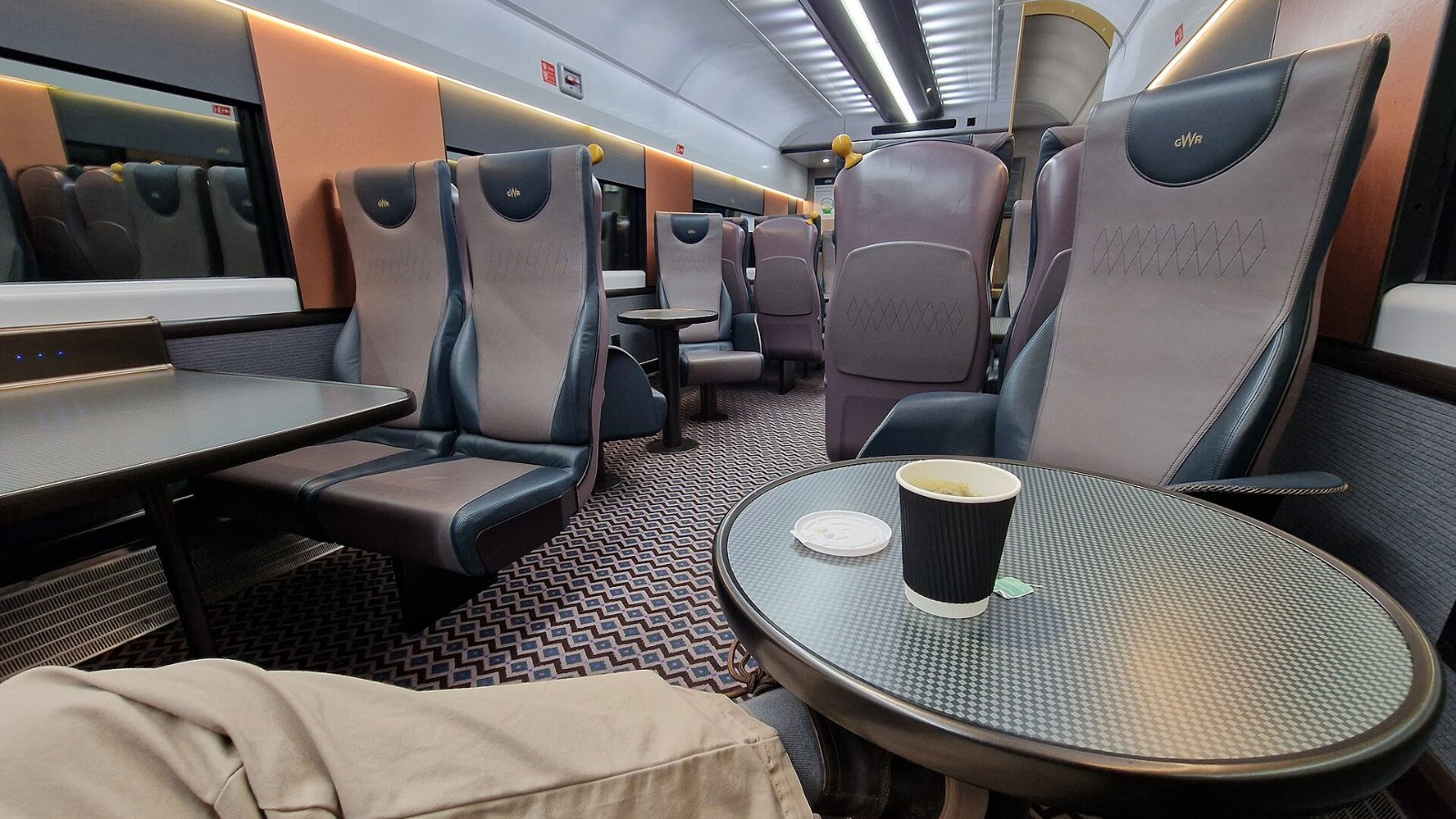
Britain’s other sleeper is the Night Riviera, running six nights a week between London Paddington and Penzance, departing at 23:45 and arriving at 07:50. Cabins start from around £49 single and £59 twin on top of the rail fare.
It is the more practical of the two services for a straightforward reason: Cornwall is awkward to reach by day. The daytime journey consumes most of a working day in each direction, whereas the sleeper converts travel time into sleeping time you were going to spend somewhere anyway. Against a hotel night plus a day train, the economics are frequently favourable rather than merely romantic.
Rail demand overall is at a record
The wider context published on 18 June 2026 shows British rail carrying 1.83 billion journeys with £12.32 billion in fare revenue, and off-peak travel up 6 per cent to 844 million journeys. That last figure is the interesting one. Growth concentrated in off-peak rather than commuter travel indicates a structural change in what rail is for — more leisure, more discretionary, less five-days-a-week commuting. Leisure travellers are precisely the market for whom an overnight service makes sense.
European connections remain constrained
The obvious extension — overnight trains from Britain to continental Europe — runs into infrastructure rather than demand. The Office of Rail and Road decided on 30 October 2025 to grant access to the Temple Mills depot in east London to Virgin Trains Europe only. Depot capacity is the binding constraint on new cross-Channel operators, and allocating it to one applicant necessarily excluded others.
Continental night trains have expanded considerably, aided by EU cross-border pilot schemes launched on 31 January 2023, including a European Sleeper service linking Amsterdam and Barcelona. Reaching them from Britain still means a daytime Eurostar and a connection rather than boarding in London and waking up in Europe, which remains the journey enthusiasts actually want.
Practical advice for booking
Book early. Sleeper capacity is fixed by the number of berths on a single train, so there is no equivalent of adding capacity when demand rises, and popular dates sell out well in advance at the lowest fare tiers.
Consider a solo cabin if the budget allows. The single largest determinant of whether a sleeper journey feels restful or exhausting is whether you share with a stranger, and the price difference is usually smaller than the experience difference.
Set expectations about sleep quality. A sleeper train is not a hotel; there is movement, there are stops, and light sleepers should expect interruption. What it reliably provides is arrival at a city centre in the early morning with a day intact, which for the right journey is worth more than an unbroken eight hours.
Why this matters to UK readers
Travellers should verify entry rules, insurance terms, local transport and official safety advice close to departure because conditions can change. Prices and availability may also vary by date, region and provider, so the examples in this report should be treated as a planning reference rather than a fixed quote.
PR Press will continue to review developments related to The Return of the Sleeper Train: Rail Travel Across Britain and Europe and update the coverage when reliable new information becomes available.
Sources and further reading
- Caledonian Sleeper (sleeper.scot)
- Office of Rail and Road data portal (dataportal.orr.gov.uk)
- Night Riviera (gwr.com)