


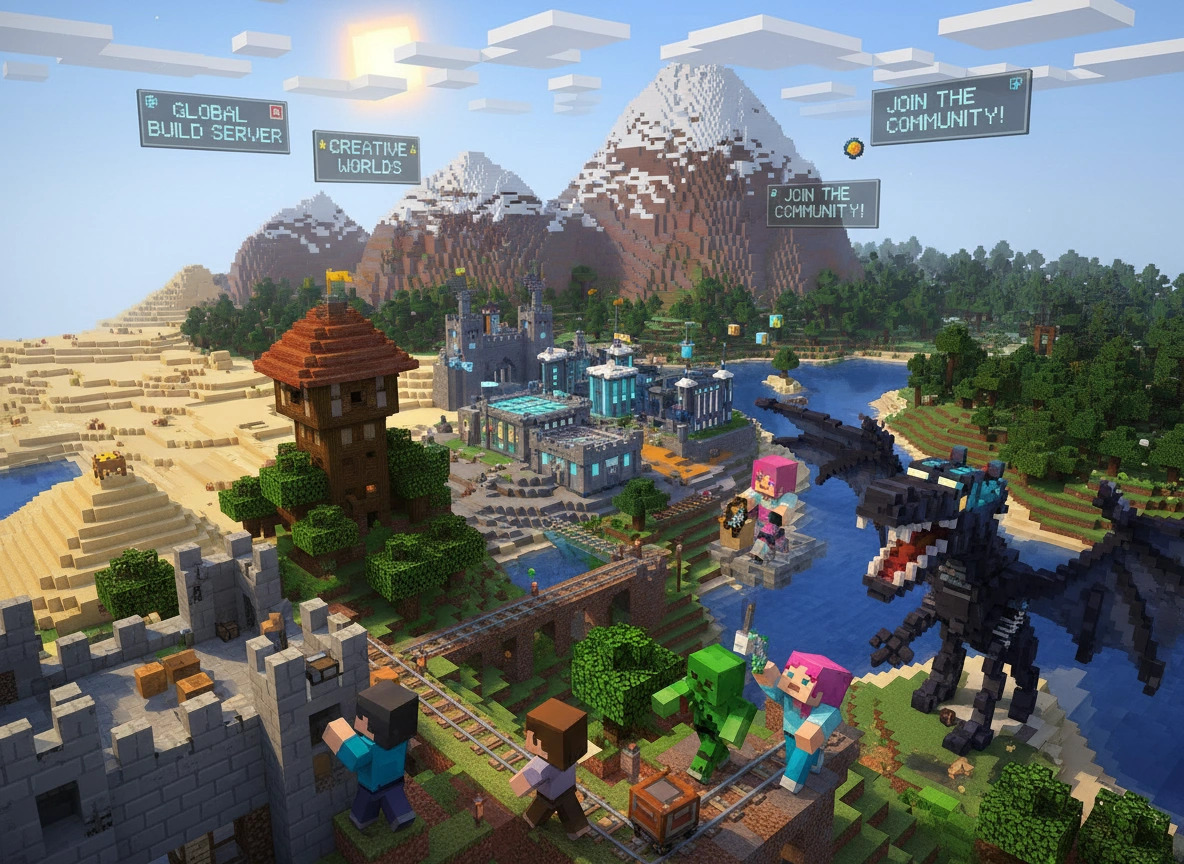
Minecraft stands as one of the most successful video games in history, boasting hundreds of millions of players and a cultural footprint that spans generations. While the core game offers a brilliant sandbox experience of mining and crafting, the true engine behind its enduring popularity lies beyond the single-player menu. Minecraft servers transformed a simple block-building simulator into a global, interconnected platform. By hosting millions of players across diverse, custom-built worlds, servers fundamentally changed how people interact with the game. They fostered massive communities, enabled unprecedented creativity, and introduced unique gameplay experiences that kept players returning for well over a decade.
The History and Evolution of Minecraft Servers
The story of Minecraft servers begins in the game’s earliest stages of development. Initially, multiplayer functionality was rudimentary. Players hosted small, localized games using peer-to-peer connections or basic server software provided by the developers. These early servers were simple, focusing primarily on vanilla survival or creative building with a close group of friends.
However, the community quickly recognized the potential for something much larger. As the player base grew, so did the demand for structured, large-scale multiplayer environments. Independent developers began creating custom server software and wrappers. The introduction of projects like Bukkit and later Spigot revolutionized the server landscape. These platforms allowed server administrators to install plugins—custom pieces of code that could modify gameplay mechanics, manage permissions, and protect player builds without requiring users to download complex client-side mods.
This technological evolution shifted multiplayer Minecraft from a small-scale gathering to a massive, centralized experience. The invention of proxy software like BungeeCord allowed administrators to link multiple servers together, creating massive networks where players could seamlessly travel between different game modes. This infrastructure laid the groundwork for the modern server ecosystem, turning individual servers into sprawling digital theme parks capable of hosting thousands of concurrent users.
Fostering Community and Shaping Gaming Culture
Minecraft servers did more than just connect computers; they connected people. They served as the foundation for countless digital communities, each with its own culture, rules, and social dynamics. When players log into a server, they enter a living world shaped by the collective actions of its inhabitants.
These communities range from small, tight-knit survival groups to massive, bustling economies. On many servers, players collaborate to build sprawling cities, establish intricate trade networks, and govern themselves through player-run councils or factions. This social layer adds incredible depth to the game. You are no longer just surviving against computer-controlled zombies; you are participating in a complex society.
Furthermore, servers played a crucial role in shaping broader gaming culture. They became social hubs where friendships formed and thrived. Many young players learned basic digital citizenship, economics, and teamwork by participating in server communities. The shared experiences found on these servers—whether coordinating a massive group build or fighting in a faction war—created lasting memories that cemented player loyalty to the game.
Enabling Creativity and Unique Gameplay Experiences
The vanilla Minecraft experience is inherently creative, but servers amplified this creativity by introducing entirely new ways to play. Because server administrators could modify game rules and introduce custom mechanics via plugins, they effectively turned Minecraft into a game engine rather than just a game.
This flexibility gave rise to a vast array of unique gameplay experiences. Players who found standard survival repetitive could join servers dedicated to Skyblock, a game mode where you start on a tiny island in the sky with minimal resources. Those seeking fast-paced action could participate in PvP (player versus player) arenas, capturing flags or destroying opponent bases.
Perhaps the most significant innovation born from servers was the minigame phenomenon. Server developers created short, highly replayable games using Minecraft’s mechanics. Entire networks dedicated themselves to hosting these minigames, offering experiences that ranged from murder mysteries and parkour courses to complex tower defense games. By providing a constant stream of new, easily accessible content, servers ensured that players always had something fresh to experience, significantly extending the game’s lifespan.
Popular Servers and Their Influence on the Player Base
To understand the massive impact of Minecraft servers, we must look at the specific communities that defined the landscape. Several prominent servers not only attracted massive player bases but also influenced the overall direction of the game.
Hypixel
Hypixel stands as the undisputed giant of the Minecraft server world. Launched in 2013, it grew from a platform for hosting custom adventure maps into a massive minigame network. Hypixel introduced polished, highly engineered game modes like SkyWars and BedWars, which became incredibly popular across platforms like YouTube and Twitch. The server’s success proved that Minecraft could compete as a fast-paced multiplayer title. Hypixel consistently hosts tens of thousands of concurrent players, acting as an anchor that keeps a massive segment of the community engaged with the game daily.
2b2t
On the opposite end of the spectrum sits 2b2t, known as an “anarchy server.” It operates with almost no rules, no administrative intervention, and a map that has never been reset since its creation in 2010. 2b2t represents a raw, unfiltered Minecraft experience. Its landscape is a chaotic, grief-ravaged wasteland, and its culture is famously hostile. Yet, the server boasts a massive, dedicated following and a rich, player-documented history of wars, factions, and incredible survival stories. 2b2t highlights the absolute freedom Minecraft offers, demonstrating how a completely hands-off approach can generate a fascinating, enduring social experiment.
Hermitcraft
While not a public server open to the masses, Hermitcraft exerts a massive influence on the game’s popularity. It is a private survival multiplayer (SMP) server played by a group of highly skilled Minecraft content creators. By recording their massive builds, intricate redstone contraptions, and playful pranks, the “Hermits” showcase the absolute pinnacle of what players can achieve in vanilla survival. Hermitcraft drives trends in building and redstone engineering, inspiring millions of viewers to start their own survival servers and attempt similar feats.
The Future of Minecraft Servers and Sustaining Popularity
As we look to the future, servers remain the lifeblood of Minecraft’s ongoing success. The landscape continues to evolve, adapting to new technologies and player expectations. One of the most significant recent developments is the push toward cross-platform play. Microsoft and Mojang have worked to bridge the gap between different versions of the game, allowing players on consoles, mobile devices, and computers to join the same servers through the Bedrock Edition. This accessibility ensures that server communities can draw from the largest possible talent pool, regardless of the hardware they own.
Additionally, server technology continues to improve. Developers are pushing the boundaries of what is possible, creating servers with custom resource packs that change the game’s visuals and audio, essentially creating standalone MMOs within the Minecraft framework. These custom experiences blur the line between Minecraft and entirely different games, proving that the platform is flexible enough to adapt to changing gaming trends.
The developers of Minecraft also recognize the importance of this ecosystem. While they provide their own hosting solution through Minecraft Realms—catering to players who want a simple, safe way to play with friends—they continue to support the third-party server community. This symbiotic relationship ensures that both the official game and the community-driven servers can thrive.
Conclusion
Minecraft’s journey from a niche indie project to a global phenomenon is inextricably linked to the power and proliferation of its multiplayer servers. By fostering deep social connections, enabling limitless creativity, and providing a platform for entirely new game modes, servers transformed a simple sandbox into a vast, self-sustaining universe. As long as dedicated administrators keep innovating and players keep seeking shared digital experiences, Minecraft servers will continue to anchor the game’s popularity for many years to come.
Please visit website for more info.

